Free Ebook For the Glory of God: Recovering a Biblical Theology of Worship
Get your favourite publication just in this internet site! This is an excellent site that you can see each day, furthermore each time you have leisure. And also the factors of why you need to get in this website are that you could find out lots of collections books. Genre, kinds, and also publishers are different. However, when you have read this page, you will get a book that we mostly provide. For The Glory Of God: Recovering A Biblical Theology Of Worship is the title of guide.
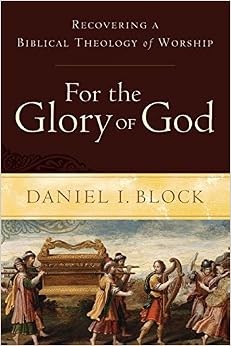
For the Glory of God: Recovering a Biblical Theology of Worship

Free Ebook For the Glory of God: Recovering a Biblical Theology of Worship
Complying with the excellent habit will disclose the excellent habit, as well. When having a great friend that has analysis habit, it is needed for you to have that such practice. Well, also reviewing is truly not your design, why do not you try it when? To attract you to love analysis, we will certainly offer For The Glory Of God: Recovering A Biblical Theology Of Worship currently. Here this book has the tendency to be the most referred book that many individuals review it.
Below, returning as well as again the variant kinds of the books that can be your desired choices. Making it right, you are better to select For The Glory Of God: Recovering A Biblical Theology Of Worship satisfying your necessity now. Even this is type of not intriguing title to read, the writer makes a very various system of the content. It will let you fill up inquisitiveness and willingness to know much more.
You might not reveal that this book will certainly provide you whatever, however it will certainly offer you something that can make your life much better. When other individuals still really feels perplexed in picking guide, it is different with what you have gotten to. By downloading and install the soft file in this site, you could improve the book as yours immediately. This is not type of magic style due to the presence of this site will certainly offer you fast ways to obtain guide.
From some conditions that exist from guides, we always end up being curious of exactly how you will certainly get this book. However, if you really feel that challenging, you can take it by adhering to the web link that is given in this web site. Discover also the various other lists of guides that can be owned and read. It will certainly not limit you to only have this publication. Yet, when For The Glory Of God: Recovering A Biblical Theology Of Worship becomes the front runner, just make it as genuine, as exactly what you actually wish to seek for and enter.
From the Inside Flap
"This is the kind of work we have come to expect from Daniel Block. It is comprehensive in virtually every avenue: biblically, theologically, historically, and practically. Whether discussing ancient temple worship or the twenty-first-century church, Block provides insightful critique as well as sound counsel for the way forward into authentically faithful worship of the Triune God. For the Glory of God is certain to have wide use in the academy, the church, and the lives of individuals--all for the glory of God and the good of the church."--Daniel L. Akin, president, Southeastern Baptist Theological Seminary"In For the Glory of God, Daniel Block brings his theological and biblical expertise to bear on Christian worship. Block provides a thorough review of the Old and New Testament evidence, and his applications are informed by a wide variety of Christian forms and theologies of worship, ranging across the history of Christianity and denominational variations. Sometimes provocative but always informative, this work should form the starting point for the study and especially the practice of that most important of purposes for which God created us."--Richard S. Hess, Denver Seminary"Daniel Block's book is truly a tour de force on the theology and practice of worship. Featuring rich exegetical and theological insight, Block's analysis of key biblical texts challenges the contemporary church to think more biblically about the nature of true worship and to establish practices of worship that are rooted in Scripture."--Carol M. Kaminski, Gordon-Conwell Theological Seminary"For the Glory of God is a study of worship that seeks a biblical theology and eschews mere pragmatism. Especially helpful is Block's close attention to both Testaments and to the debates of church history--though the Western church is better covered than the East. Here is a conscientious scholar with a pastor's heart, whose work will benefit worshipers in general and church leaders in particular, even those who do not agree with all of his conclusions."--Edith M. Humphrey, Pittsburgh Theological Seminary"This is an amazing volume. The author is a seasoned and celebrated Old Testament scholar who has managed to write an encyclopedic and in-depth biblical theology of worship that covers virtually every conceivable element of the topic. At the same time, he has written this book in a way that speaks understandably to contemporary issues in the church. This will be a key resource for scholars, pastors, and lay people for decades to come."--Richard E. Averbeck, Trinity Evangelical Divinity School
Read more
From the Back Cover
"Daniel Block is one of the most knowledgeable, thoughtful, and prolific teachers of the Old Testament writing today. In this important book, he turns his attention to the crucial question of worship. He rightly insists that the question is not whether we enjoy worship but rather whether God is pleased with our worship. He brings his impressive understanding of the Bible to bear on the question of proper worship. The result is an insightful study of worship that has practical implications for all."--Tremper Longman III, Westmont College"This book is a scholar's gift to the church. Block's ability to analyze and synthesize the biblical texts is surpassed only by his passion in challenging us to fresh insights. Biblical scholars and theologians will appreciate his thorough study. Pastors and other worship leaders will wonder how they ever got along without it. We are all in his debt."--John H. Walton, Wheaton College"For the Glory of God returns consideration of Christian worship to its theological source: the Scriptures. There is no firmer starting point. We would do well to heed Block's advice to start at the source and to let Scripture guide us in worshiping God both within and without the walls of our church buildings."--Clay Schmit, provost, Lutheran Theological Southern Seminary, Lenoir-Rhyne University"Vital and faithful worship practices are shaped by a wide variety of Christian leaders. How heartening it is that over the past several years biblical scholars have given new priority to helping us faithfully study and savor what the Bible says about worship. Block's evangelical, gospel-focused contribution to this conversation is both vigorous and accessible and will be useful in both academic and congregational settings."--John D. Witvliet, Calvin Institute of Christian Worship, Calvin College and Calvin Theological Seminary"In this accessible, comprehensive resource, world-class Old Testament scholar Daniel Block presents a complete biblical theology for the worship of God. With its careful exegesis of the Bible, clear understanding of ancient Near Eastern culture, and practical suggestions for the local church, For the Glory of God is destined to become an essential text for putting God at the center of worship."--Philip G. Ryken, president, Wheaton College
Read more
See all Editorial Reviews
Product details
Paperback: 432 pages
Publisher: Baker Academic; Reprint edition (September 20, 2016)
Language: English
ISBN-10: 0801098564
ISBN-13: 978-0801098567
Product Dimensions:
6 x 1.1 x 9 inches
Shipping Weight: 1.4 pounds (View shipping rates and policies)
Average Customer Review:
4.5 out of 5 stars
24 customer reviews
Amazon Best Sellers Rank:
#213,270 in Books (See Top 100 in Books)
Looking for a thorough examination of all aspects of biblical worship? Daniel Block's book is for you. This in-depth study explores the object of our worship as well as the cultic acts of worship we perform as individuals, families, and communities. Block uses "cult" in its classical definition as "legitimate forms and systems of religious worship, especially external rites and ceremonies where homage is given to divine beings." Of course, in this context, worship is much more than simply music or praise. In eight chapters, the author details patriarchal, Mosaic, first/second temple, and New Testament specifics of different worship expression. These include worship as daily life, family life and work, ordinances, hearing/proclaiming Scripture, prayer, music, sacrifice/offerings, and drama.Specific gleanings:Daily Life as Worship. Unless the worshiper walks with God in daily life, no cultic acts will impress God positively. God's will at Sinai was defined in ethical rather than ceremonial terms... covenants involve primarily relationships between people rather than commitment to a code of conduct or liturgical regulations. The Decalogue charges heads of households to be covenantally committed to YHWH, their households, and their neighbors, so that they will resist seeking their own advantage at others' expenses and will always seek others' interest above their own. In Moses' view, attitude and action are interrelated. Without fear and love, walking, serving, and keeping all the commands become legalistic efforts at gaining the favor of God. Conversely, without walking, serving, and keeping the commands, fear and love are useless and dead.Family Life and Work as Worship. For the most part, Scriptures portray formal religious exercises either as personal/individual actions or as religious events involving the entire community. Instances of what we call `family worship' are rare. Rather than relegating instructional worship to the classroom, or compartmentalizing it to ten minutes of family devotions in the morning or evening, or assigning the task to professionals (like Levites), [Moses] emphasized that true family worship should happen spontaneously, as adults seize opportunities to teach the Torah, refresh the memories of God's grace, and inculcate sound theological convictions and commitments.Ordinances as Worship. While affirming that justification comes by faith alone through the work of Christ alone, Protestants recognize that the Holy Spirit uses many `means of grace' to bless the church: ministry of the Word, baptism, the Lord's Supper, prayer, worship, giving, fellowship, the exercise of spiritual gifts, evangelism, and so forth. While the link between the Lord's Supper and Passover is universally recognized, the significance of the phrase `my blood of the covenant' is generally overlooked. By using the expression `my blood of the covenant,' Jesus declared that through his own sacrificial blood God binds himself to his new covenant people, and by drinking of it his people bind themselves to him. Thus, as a covenant ritual, participating in the Lord's Supper means not only claiming the privilege of covenant relationship but also committing oneself to fidelity to God's will. Whereas Israelites would bring their offerings to YHWH, the divine Host, and eat them in his presence, in the Lord's Supper the divine Host offers himself for our spiritual nourishment. No act of corporate worship is more important than communion at the Lord's Table. The New Testament offers few prescriptions for corporate Christian worship; it does not tell us to meet on Sunday mornings, begin our services with song, listen to thirty-minute sermons, or pass around the offering plate. However, it does prescribe believers' regular participation in the Lord's Supper. When people are converted and baptized into the name of Christ and into the church, their greatest delight should be fellowshipping at the Table of the Lord.Hearing and Proclaiming the Scriptures in Worship. Whereas Christians generally ignore or reject the rest of the Sinai revelation and the Torah of Moses in Deuteronomy as irrelevant, they interpret the Decalogue as a distinctive statement of moral truth, universally applicable and permanently relevant. This special treatment is unwarranted. The Decalogue's authority and universality are indistinguishable from the authority and universality of the other constitutional documents in the Pentateuch. YHWH reinforces the notion that worship is to inspire devotion to YHWH and create an ethical community of faith.Acts 2:42 notes that believers in Jerusalem were devoted to fellowship, breaking bread, prayer, and the apostles' teaching. The last element probably involved systematic reading and interpretation of the Scriptures by the apostles, particularly how they should be understood in the light of Christ. In the assembly of God's people, giving and receiving instruction was obviously a worship activity. Paul defines the aim of such instruction as `equipping the saints for the work of service to the building up of the body of Christ' (Eph 4:12). Paul suggests in Romans 12:7 that responsibility for teaching is not restricted to professionals; it is a gift distributed by the Holy Spirit to certain members of the congregation. Scriptures were written to be heard; they were not written primarily to be preached.Prayer as Worship. Seduced by the health-and-wealth gospel, we have developed the notion that the primary purpose of worship is to give us a spiritual high and that negative feelings and expressions of grief should be suppressed. However, the Scriptures portray worship, especially prayer, in brutally frank terms. Prayers may express submission, supplication, intercession, praise, thanksgiving, or adoration, but God's ears are also open to our laments and even our complaints. In the Psalter, psalms of lament actually outnumber psalms of praise two to one. Prayer is not about informing God of our needs as if he is ignorant; instead, it is `a vehicle of humility, an expression of un-self-sufficiency, which in biblical thought, is the proper stance of humans before God.' Prayer is the supreme reverential verbal act of submission and homage before the divine Sovereign. Like all worship, true prayer is concerned primarily with the glory of God.Music as Worship. Music may indeed be `both worship and an aid to worship,' but it is neither indispensable for nor the primary element in biblical worship. In contrast to the vacuous, repetitious, and mindless music of the world, truly worshipful music is filled with Scripture, the story of redemption, sound doctrine, and the glory of Christ. As an expression of the indwelling word of Christ, truly worshipful song revolves around the Word, rather than song, which is neither the primary focus nor form of worship. Too often in worship wars, pragmatism (`What do people want?') and personal taste (`What do people like?'), rather than biblical perspectives or theology, drive the discussion, and music in worship is often designed to satisfy those whose worship is unacceptable to God. [The flawed thinking is that] to achieve the highest administrative goal, that people will return next Sunday, the music must create a certain mood, and the service must engage attendees like a theatrical performance or concert. Delighted--if not intoxicated--by the crowds, we may be oblivious to the reality that a packed house may be proof of disingenuous (calculated) worship rather than worship acceptable to God. The goal of congregational worship and of all ministry is the glory of God, and that God the Father and God the Son are most glorified when we sing of them and not of ourselves. The primary purpose of music in worship is neither to create a certain mood nor to attract the unsaved to the service; it is to give voice to the praises and laments of God's people. This reminds us that our songs must be about God's love for us, not about our love for him. Lyrics drawn directly from Scriptures should respect their style and tone and involve entire passages, not simply slogans and sound bites to be repeated mindlessly. Christ-centered worship is Word driven. The songs we sing and the music we play must be subservient to the Word that is read and preached.Ministers of music are hired for their musical skill, achievements, creativity, or enthusiasm on stage, without sufficient concern for their knowledge of Scripture, their orthodoxy, or their theology of worship. The more congregations rely on musical professionals, the less the people will sing. And sanctuaries designed like theaters and concert halls are inimical to the growth of the body of Christ. Worship is not about performers on the stage and an audience in the pews; it is about humble submission to the Lord as demonstrated in transformed hearts and lives. Worship leaders are not `masters of ceremony,' and worshipful music is not about the musicians, any more than preaching is about the preacher. The primary identification of those who lead in worship is with the God whom they represent before the people.Sacrifice and Offering as Worship. When [Old Testament] saints presented sacrifices in faith, they based their hope of forgiveness on the word of God. The desired effect depended on worshipers' trust in the word of God and their covenant commitment to him. If they came to the ritual with clean hands and pure heart (Pss. 15, 24), God would forgive them. When God observed faith demonstrated in a pure life and rituals performed as he instructed, he applied to that person the forgiveness made possible through the blood of Christ, whose redemptive work was `foreknown' and who was slain `before the foundation of the world.' The basis of forgiveness is the same for all: the sacrificial work of Christ--though we on this side of the cross have full revelation of the objective reality. It is doubtful that many, if any, in ancient Israel understood the relationship between their replica actions and the real sacrifice of Christ. However, the efficacy of the rituals did not depend upon full and perfect knowledge; it depended on YHWH's word. Having presented their offerings in faith, faithful Israel could rejoice in his forgiving grace. [As for tithes], to give--even to worthy causes--in order that we may get reduces Christianity to a fertility religion. Although generosity is indeed a precondition to blessing, Deuteronomy portrays it as the supreme expression of gratitude for grace already received. People concerned about God's honor will support his work, his servants, and his place of worship generously, irrespective of return. Evangelicals must be cured of their schizophrenic disposition toward biblical regulations concerning sacrifices and offerings. On the one hand, our leaders constantly declare that [Old Testament] cultic laws no longer apply, but on the other, they cajole and pressure God's people to tithe.The Drama of Worship. Christians today would do well to reconsider their fascination with drama in worship and replace it with the drama of worship. At its best, all worship is drama--entering the presence of God and celebrating, reliving, and actualizing his grace in life. Congregations should treat the festivals of the church year as opportunities for celebration rather than obligations to observe.Block rounds out his book with chapters on the design of sacred space (demonstrating how different designs affect how the word is heard, how the congregation participates, etc.) and leaders in worship. A key nugget from the final chapter: "In the New Testament, regardless of the person's office, leadership in worship rarely if ever involves primarily leading a worship service. Instead, it involves practical ministry: teaching, encouraging the saints, guarding the flock, caring for the needy, and so forth. As a corollary, in contrast to prevailing contemporary practice, the Scriptures never portray musicians as primary worship leaders... We must understand the word `worship' as much more than music, and we must stop referring to the chief musician in the church as `the worship leader.'
This is one of my favorite books that I've read in a long time. It is a thoughtful and thorough examination of the whole Scriptures including the "First Testament" and New Testament to uncover an exhaustive and biblically principled theology of worship. The writing style is very easy to resonate with and make it easy to reflect on the issues of modern worship in light of what the Bible teaches. I would highly recommend this read to anyone interested in learning more about worship.
Congratulations Dr. Block! You've hit a home run! By walking us through the pages of Scripture and history, not only have you convincingly revealed a Biblical picture of worship but just as importantly, you've exposed the shallowness of the 21st Century's understanding of "Casual Christianity." For those brave enough to read "For the Glory of God" you will quickly discover that central to a Biblical understanding of worship is the idea that worship is a human response to a Holy God. Dr. Block will then take you on a journey which will then in turn lead to the conclusion that we can no longer hold to the idea that real worship can or ought to be confined to one hour event on a Sunday morning.
This book has a magnificent wealth of wisdom that comes directly from Scripture on the topic of worship. It goes so much deeper than Sunday morning gatherings or music. It gets to the heart of who we worship and why we worship Him.
This book is rich in background information and history. He makes many great statements that every leader should think through. At times his bias showed through and he would make unsubstantiated statements or conclusions. Definitely needs to be read in discussion on Worship and the Christian life.
As a pastor, I have a somewhat extensive library, including many "Christian living" books. "For the Glory of God" is one of the best books I've ever read and should be in every Christian's hands (especially Christian men).
It provides an in-depth systematic theology of worship in both the First (Old) and New Testament. His review of contemporary issues of worship is helpful, but mostly of what the scriptures say and do not say about Worship.
It is rare to find a book that enlightens the doctrines of biblical worship thr way Prof Daniel Blook does it in thos book. It mature me spiritually and I’ve learned a lot about the meaning of worship according to OT Theology and NT Theology as well.
For the Glory of God: Recovering a Biblical Theology of Worship PDF
For the Glory of God: Recovering a Biblical Theology of Worship EPub
For the Glory of God: Recovering a Biblical Theology of Worship Doc
For the Glory of God: Recovering a Biblical Theology of Worship iBooks
For the Glory of God: Recovering a Biblical Theology of Worship rtf
For the Glory of God: Recovering a Biblical Theology of Worship Mobipocket
For the Glory of God: Recovering a Biblical Theology of Worship Kindle

SOCIALIZE IT →